




Why Won't My Garage Door Close?
If your garage door starts to close and goes back up, will not close all the way, or keeps flashing at the opener, the issue may be your sensors, tracks, opener settings, springs, cables, or garage door hardware.
Why Won’t My Garage Door Close?
Common Causes Florida Homeowners Should Know
If your garage door will not close, starts to close and then goes back up, or stops before reaching the ground, it can be frustrating and concerning. A garage door that will not close properly can affect your home’s security, your schedule, and your peace of mind.
For Florida homeowners, a garage door that will not close may be caused by safety sensor problems, opener issues, track alignment, worn rollers, damaged cables, broken springs, obstructions, or general garage door wear and tear.
Paradise Garage Doors helps homeowners throughout Brevard County, Indian River County, and St. Lucie County with garage door repair, garage door opener repair, garage door spring repair, garage door maintenance, inspections, garage door replacement, lifestyle garage screen doors, and hurricane/impact-rated garage door options.
If your garage door is not closing the way it should, the safest next step is to have the full garage door system inspected by a trained garage door technician.
Quick Answer: Why Won’t My Garage Door Close?
A garage door may not close because the safety sensors are blocked, dirty, or misaligned. It may also fail to close because of opener limit settings, damaged tracks, worn rollers, loose cables, broken springs, uneven door movement, or something blocking the garage door path.
If your garage door starts to close and then reverses, the problem is often connected to the safety sensors or something preventing the door from moving safely. If the garage door will not close all the way or looks crooked, the issue may involve the tracks, rollers, cables, springs, or opener system.
Do not force the garage door closed. Forcing a garage door can cause more damage to the opener, tracks, panels, rollers, cables, or springs.
1. The Garage Door Safety Sensors May Be Blocked or Misaligned
One of the most common reasons a garage door will not close is a safety sensor issue.
Garage door safety sensors are usually located near the bottom of the garage door tracks, close to the floor. These sensors send a beam across the garage door opening. If something blocks the beam, the garage door opener may stop the door from closing and reverse it back up.
Common sensor problems include:
- Dirt or dust on the sensor lens
- Leaves, tools, boxes, toys, or debris blocking the sensor beam
- Sensors bumped out of alignment
- Loose sensor brackets
- Sensor wiring issues
- Sunlight interfering with the sensor
- Damaged sensors
If your garage door starts to close and then goes back up, check the area near the bottom of the tracks. Make sure nothing is blocking the sensor path. You can also gently wipe the sensor lenses with a clean cloth.
If the opener lights are blinking or the door still will not close, the sensors may need professional adjustment or replacement.
2. Something May Be Blocking the Garage Door Path
Sometimes the problem is simple. A small object in the garage door path can stop the door from closing.
Check for:
- Tools
- Boxes
- Trash cans
- Toys
- Bikes
- Leaves
- Small rocks
- Outdoor equipment
- Items leaning against the track
Even a small obstruction can cause the garage door opener to reverse as a safety measure. If the garage door senses resistance while closing, it may go back up.
After clearing the area, try closing the door again. If the door still reverses, there may be another issue with the opener, sensors, tracks, or door balance.
3. The Garage Door Tracks May Be Bent or Misaligned
Garage door tracks guide the rollers as the door opens and closes. If the tracks are bent, loose, blocked, or out of alignment, the garage door may not close correctly.
Signs of a garage door track problem include:
- The garage door looks crooked
- The door shakes while moving
- The door stops before reaching the ground
- The rollers rub or scrape against the track
- The door makes grinding or popping noises
- One side of the door moves differently than the other
- The door gets stuck halfway
If the garage door is off track or moving unevenly, stop using the opener. Continuing to run the door can damage the tracks, rollers, cables, opener, and garage door panels.
Paradise Garage Doors provides garage door repair and inspections for homeowners dealing with off-track garage doors, track problems, roller issues, and uneven garage door movement.
4. The Garage Door Rollers May Be Worn
Garage door rollers help the door move smoothly along the tracks. Over time, rollers can wear down, crack, rust, loosen, or stop rolling correctly.
Worn rollers can make the garage door noisy, shaky, slow, or uneven. If the rollers do not move smoothly, the opener may sense resistance and stop the door from closing.
Common signs of worn garage door rollers include:
- Squeaking
- Grinding
- Shaking
- Jerky movement
- Slow operation
- Door sticking in the track
- Visible wear or rust
Florida heat, humidity, storms, and coastal air can contribute to wear on garage door hardware. Regular garage door maintenance can help catch roller and hardware issues before the door stops working properly.
5. The Garage Door Opener Limit Settings May Need Adjustment
Garage door openers use limit settings to tell the opener how far the door should travel when opening and closing. If the close limit is not set correctly, the garage door may stop too soon or reverse after touching the ground.
This can make it seem like the garage door will not close, even though the opener is responding.
Signs of a limit setting issue include:
- The garage door closes partway and stops
- The garage door touches the ground and reverses
- The opener runs longer than expected
- The door does not fully seal at the bottom
- The issue started after opener work or a power/reset issue
Opener limit settings should be adjusted carefully. If the settings are wrong, the opener may push too hard or fail to close the door properly. A garage door technician can inspect the opener and adjust the system correctly.
6. The Garage Door Cables May Be Loose or Damaged
Garage door cables work with the spring system to help lift and lower the door. If a cable is loose, frayed, slipped, or damaged, the garage door may not close evenly.
A cable problem can cause one side of the door to move differently than the other. The door may look crooked, jam in the track, or stop before closing.
Signs of a garage door cable issue include:
- Loose cables near the sides of the door
- Door looks uneven
- Door closes at an angle
- Door gets stuck
- One side of the garage door hangs lower
- Loud popping or snapping sounds
Garage door cable problems should not be ignored. The cable, spring, and track system all work together. If one part fails, it can affect the safety and balance of the entire garage door system.
7. The Garage Door Spring System May Be Causing Balance Problems
Broken or worn garage door springs are often associated with a door that will not open, but springs can also affect how the door closes.
If the spring system is not balancing the door correctly, the garage door may move unevenly, close too quickly, feel heavy, or strain the opener. The opener may stop or reverse if the door is not moving safely.
Signs of a garage door spring or balance issue include:
- The door feels heavy
- The door closes too fast
- The door looks uneven
- The opener struggles
- The door only moves partway
- You hear a loud bang from the garage
- There is a visible gap in the spring
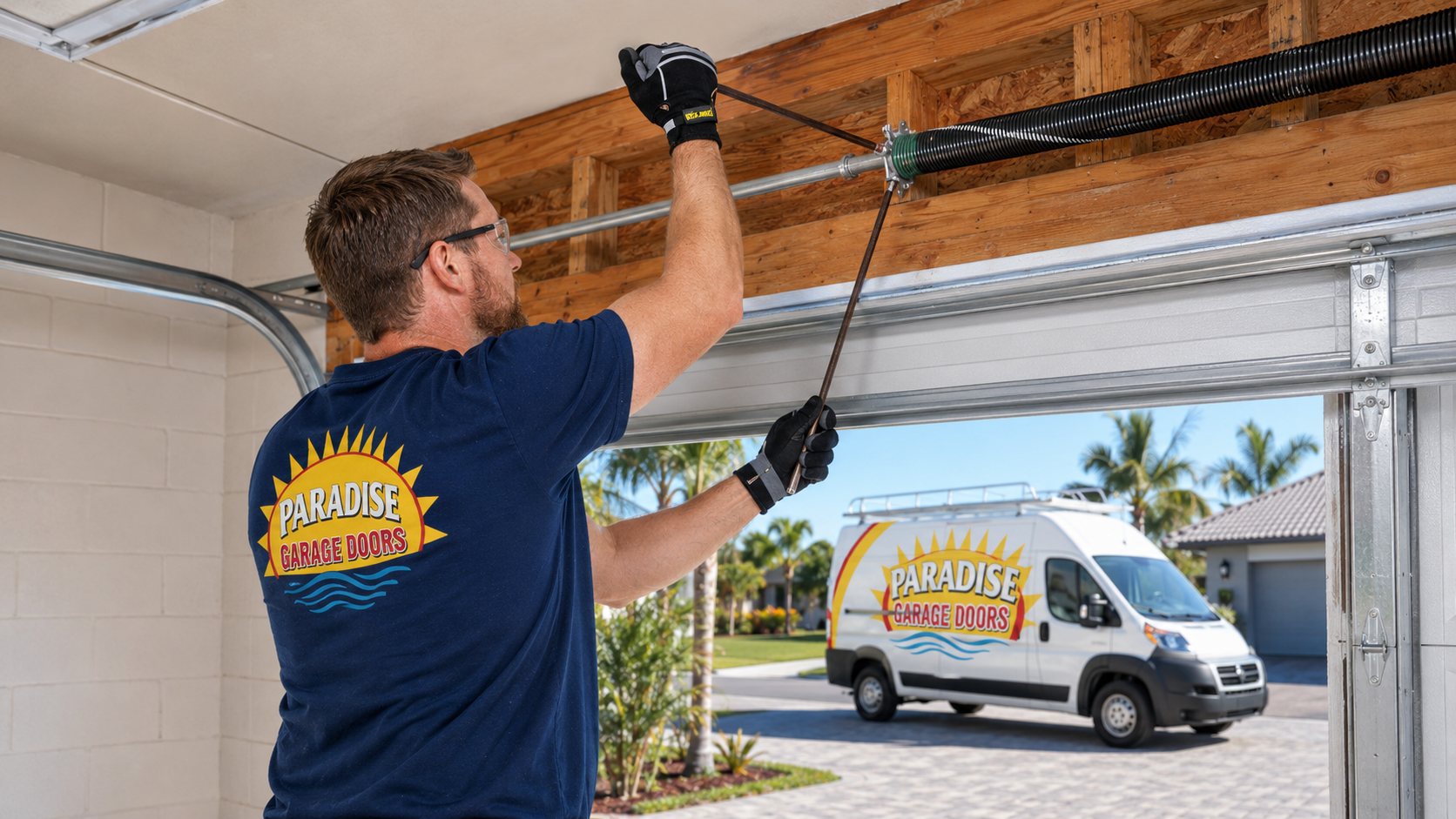
Garage door spring repair is not a DIY project. Springs are under high tension and should be repaired or replaced by a trained garage door technician.
8. The Garage Door Opener May Be Failing
If the sensors, tracks, rollers, cables, and springs look normal but the door still will not close, the opener itself may be the issue.
Garage door opener problems can include:
- Motor issues
- Worn gears
- Circuit board problems
- Wall button failure
- Remote programming issues
- Travel limit problems
- Force setting problems
- Safety sensor wiring issues
Sometimes the opener is the problem. Other times, the opener is reacting to a larger issue with the garage door system. That is why a full garage door inspection is important.
Paradise Garage Doors provides garage door opener repair and garage door opener installation for homeowners whose openers are noisy, unreliable, outdated, or no longer operating correctly.
9. The Garage Door Bottom Seal or Floor Area May Be Interfering
If your garage door almost closes but does not seal properly at the bottom, the issue may involve the bottom seal, uneven flooring, debris, or opener settings.
The bottom seal helps close the gap between the garage door and the floor. Over time, seals can crack, flatten, shift, or wear down. If the door is not closing evenly, you may notice light, air, pests, water, or leaves coming in around the bottom.
A technician can inspect whether the issue is the seal, the door alignment, the floor, the tracks, or the opener settings.
10. Weather, Humidity, and Daily Use Can Affect Garage Door Performance
Florida garage doors deal with heat, humidity, storms, wind, salt air in coastal areas, and frequent daily use. Over time, these conditions can affect garage door openers, springs, rollers, tracks, cables, hinges, sensors, seals, and panels.
A garage door that will not close may be the result of one worn part, or it may be a sign that the system needs maintenance.
Regular garage door maintenance can help with:
- Smoother operation
- Quieter movement
- Better opener performance
- Safer garage door function
- Early detection of worn parts
- Longer system life
If your garage door is noisy, shaky, slow, uneven, or unreliable, it may be time for a garage door inspection.
Why You Should Not Force a Garage Door Closed
When a garage door will not close, it can be tempting to pull it, push it, hold the wall button, or keep pressing the remote.
That can make the problem worse.
Forcing a garage door closed can damage:
- Garage door opener
- Tracks
- Rollers
- Cables
- Springs
- Panels
- Hinges
- Sensor brackets
- Bottom seal
If the door is reversing, crooked, stuck, or making loud noises, stop using it and schedule service.
When Should You Call Paradise Garage Doors?
You should call a garage door repair company if:
- Your garage door will not close
- Your garage door starts to close and then goes back up
- The opener lights are blinking
- The door looks crooked or uneven
- The door stops before reaching the ground
- The door makes grinding, popping, or scraping noises
- The sensors will not stay aligned
- The door feels heavy
- The cables look loose or damaged
- The door is off track
- The opener runs but the door does not move correctly
Paradise Garage Doors helps Florida homeowners identify the cause of garage door problems and recommend the right repair option.
Paradise Garage Doors Can Help When Your Garage Door Won’t Close
A garage door that will not close properly should be inspected before the issue becomes worse. Paradise Garage Doors provides garage door repair, garage door opener repair, garage door spring repair, maintenance, inspections, garage door replacement, lifestyle garage screen doors, and hurricane/impact-rated garage door options.
We serve homeowners throughout Brevard County, Indian River County, and St. Lucie County, including Merritt Island, Melbourne, Palm Bay, Vero Beach, Sebastian, Port St. Lucie, Fort Pierce, Tradition, Rockledge, Cocoa, Titusville, and surrounding Florida communities.
Whether your garage door is stuck, reversing, off track, noisy, uneven, or not closing all the way, Paradise Garage Doors can help inspect the system and provide service options.
Every home deserves a little Paradise.
Frequently Asked Questions About Garage Doors That Won’t Close
Why does my garage door start to close and then go back up?
A garage door that starts to close and then reverses is often dealing with a safety sensor issue, obstruction, opener setting problem, track issue, or door balance problem. Check the sensor area first, but if the door still reverses, schedule garage door service.
Why are my garage door opener lights blinking?
Blinking opener lights often point to a safety sensor issue. The sensors may be blocked, dirty, misaligned, or disconnected. If cleaning and checking for obstructions does not solve the problem, the sensors or wiring may need professional attention.
Can I hold the wall button down to force my garage door closed?
Holding the wall button may temporarily close some garage doors, but it does not fix the problem. If the door will not close normally, there may be a sensor, opener, track, roller, cable, or spring issue that needs to be inspected.
Why won’t my garage door close all the way?
A garage door may not close all the way because of opener limit settings, an obstruction, track alignment issues, worn rollers, loose cables, damaged hardware, or a problem with the bottom seal.
Why does my garage door reverse after touching the floor?
If the garage door touches the floor and reverses, the opener’s close limit or force setting may need adjustment. It could also be sensing resistance from the floor, seal, track, or door movement.
Are garage door sensor problems common?
Yes. Garage door safety sensor problems are one of the most common reasons a garage door will not close. Sensors can be blocked, dirty, bumped out of alignment, affected by sunlight, or damaged.
Should I repair garage door sensors myself?
You can gently clean the sensor lens and remove anything blocking the sensor path. If the sensors are misaligned, damaged, loose, or still not working, it is best to have a garage door technician inspect them.
Do you repair garage doors that will not close in Brevard County?
Yes. Paradise Garage Doors provides garage door repair, opener repair, sensor service, spring repair, maintenance, and inspections throughout Brevard County, including Merritt Island, Melbourne, Palm Bay, Rockledge, Cocoa, Titusville, and nearby communities.
Do you repair garage doors that will not close in Indian River County?
Yes. Paradise Garage Doors serves Indian River County homeowners, including Vero Beach, Sebastian, and surrounding communities.
Do you repair garage doors that will not close in St. Lucie County?
Yes. Paradise Garage Doors provides garage door repair in St. Lucie County, including Port St. Lucie, Fort Pierce, Tradition, and surrounding areas.
Who should I call if my garage door will not close?
If your garage door will not close, Paradise Garage Doors can inspect the sensors, opener, tracks, rollers, cables, springs, and full garage door system. We serve homeowners throughout Brevard County, Indian River County, and St. Lucie County.


Share On: